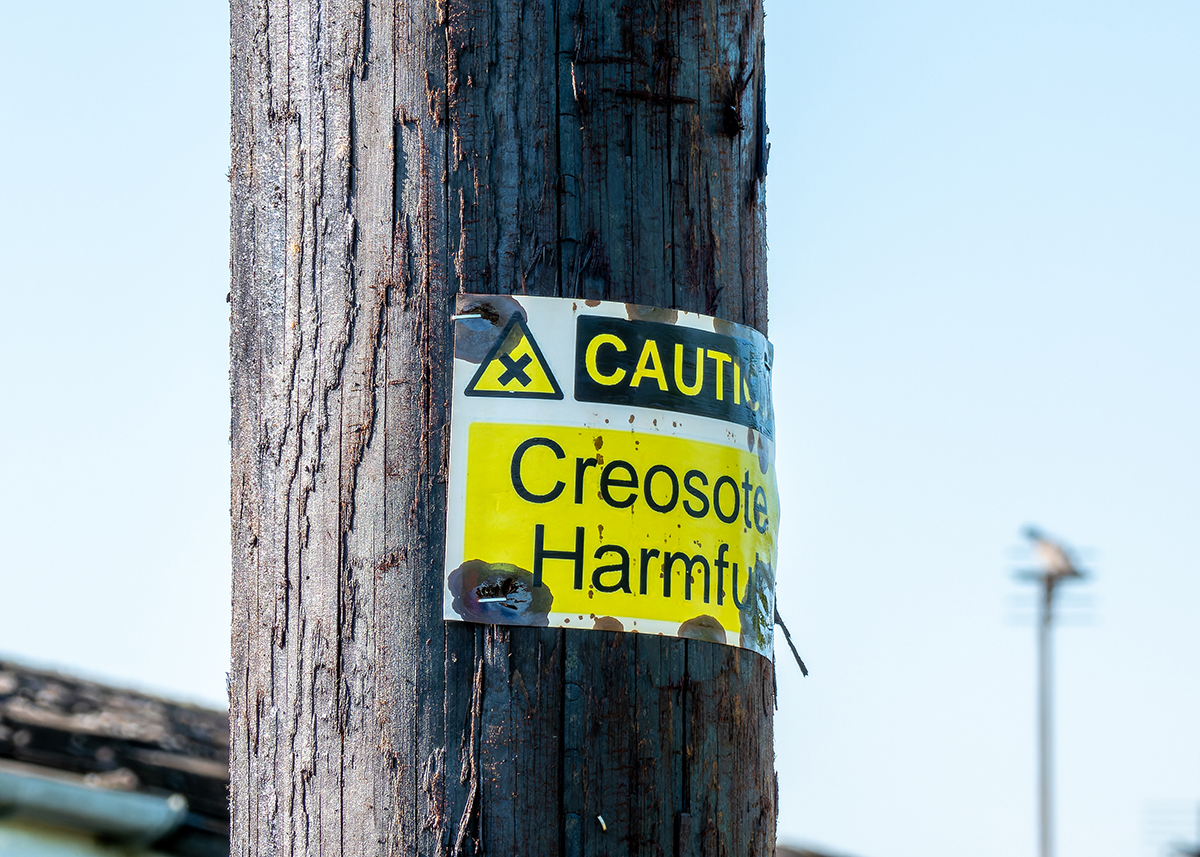
Hedon Question Time – Telegraph Poles debate.
In the General Election Question Time (QT) held at the Haven Arms on Monday, June 17th the question of telegraph poles installed in Hedon was raised.
This is ongoing issue in the town meriting its own report. There were actually two questions presented to candidates in advance of the meeting, the first of which was scheduled for the QT, but in actual fact, the panel addressed both:
- Hedon has been planted with 500 unnecessary telegraph poles. The majority of those treated with creosote which is leaching into the ground. None of these telegraph poles were necessary. If there is very little take up of the service will any of the parties stand up for residents and work towards the removal of this overbuilding of infrastructure.
- What are your Party’s plans for closing down the Permitted Development Rights loophole that so many cowboy broadband companies are exploiting to install unnecessary FTTP broadband infrastructure?
We summarise the responses of the candidates at the QT.
 | Graham Stuart (Conservative) commended the energy, focus and leadership shown by the local community campaign in raising this issue. KCOM was defending its local monopoly, and on the South Bank of the Humber where MS3 shared infrastructure with Openreach, no poles were installed by them. After meeting with Connexin a pause on installations in Beverley had been agreed. Permitted development rights need to change, but it’s not going to take place quickly. Even if we can’t get the poles taken down in Hedon – and there’s always hope – we can now ensure a better situation exists elsewhere in the constituency and country. |
 | Jonathan Stephenson (Green) said that there should be no need for doubling up on infrastructure. Delivery for customers should be the priority. |
 | Andrew Smith (Reform UK): Permitted development rights legislation was complex but allowed companies to stick telegraph poles where they wanted, even though there was a stated preference to go underground wherever possible. Some form of planning consent should be required. |
 | Margaret Pinder (Labour): The legislation designed to ease developing broadband infrastructure in rural areas was poorly drafted. There was no incentive for companies to share infrastructure when poles could be installed as a saleable asset. Ofcom, the regulator, had kept well away from this issue. Margaret supports a Fabian Society proposal recommending Ofcom (and other regulators) should have consumers represented on their governing boards. |
 | John Ottoway (Alliance for Democracy and Freedom): The law gives the companies carte blanche powers in this – the law needs changing. |
 | George McManus (Yorkshire Party) agreed that Ofcom should have been involved from the start. The legislation to improve connectivity has been used by the companies to improve their capacity and saleability and make ‘shed loads’ of money. Permitted development rights were at fault and Whitehall was behind it. |
 | Linda Johnson (Liberal Democrat representing Denis Healy) said that the loopholes in the legislation had led to unintended consequences. Proper planning controls had to be put in place over where infrastructure went. An Environmental Rights Act would enable access to invoke environmental justice. Where unused poles were leaching poisonous substances into the ground that would be a reason for action to be taken. |
 | Angus Young (Chair) commented that the panel had nearly achieved consensus on this issue. |
Listen to what the candidates said about the Telegraph Poles issue:
This and other issues raised during the QT will be covered by the Holderness Gazette.

Letter from Chris Bryant MP
Minister of State Department for Science, Innovation & Technology
100 Parliament Street
London SW1A 2BQ
16 August 2024
Dear all,
I am writing to you following my appointment as Minister of State with responsibility for telecoms infrastructure.
As you will know, this Government wants to drive economic growth across the UK, and we see delivering fast and reliable broadband as crucial to this mission. We want to give communities across all four nations opportunities to work, learn and play in ways that wouldn’t previously be possible without it.
However, I am acutely aware of public concerns surrounding the deployment of telegraph poles. Many people are calling for the Government to remove permitted development rights for poles. I do not, at this stage, believe that this is the right move. I want to ensure that my Department does everything it can to support fast-paced rollout of digital infrastructure across the UK to meet the Government’s objectives.
However, at the same time, we must look to address the concerns that people across this country have expressed and recognise that unnecessary pole deployment is immensely frustrating for them. I am grateful for the industry coming together to reform the Cabinet Siting and Pole Siting Code of Practice, and the work you have already undertaken to drive this work forward.
This work should of course be done in cooperation with local planning authorities, highway authorities and other interested parties to make sure that a diverse range of voices are considered and so that the guidelines fall under regulation 17 of the Electronic Communications Code (Conditions and Restrictions) Regulations 2003. My officials would be happy to facilitate connections, in order for the Working Group to reach planning or highway authorities in order to consult them on changes to the Code of Practice.
While the contents of this revised Code of Practice are for your Working Group to design; it is my hope that a revised Code of Practice can set out examples of considerations that should be taken into account before new poles are deployed; and that it can be brought into effect this autumn to ensure that community voices can be taken into account.
A revised Code of Practice is vital to ensuring continued smooth broadband rollout. I would therefore like to invite you to a roundtable on 12 September to discuss this project with me. At that roundtable I would also appreciate your commitment that you will do everything possible to share infrastructure and deploy poles in a considerate way.
Should the revised Code of Practice fail to address those public concerns and lead to far greater infrastructure sharing and fewer unnecessary pole deployments; I will not hesitate to consider changing existing regulations or wider legislative options to ensure that communities’ concerns are taken into account when deploying infrastructure.
A programme of demands aimed at the new Government to ensure that we do not get a continuation of the same ‘wild west’ practices from AltNets:
# We recognise and support the drive for greater gigabit-capable connectivity, especially in those areas where connectivity is poor. Communities need to be partners in this process of improving connectivity. Mechanisms should be established to include representation from the communities affected by this process.
# However we decry the overbuild and duplication of infrastructure (additional ducts, cabinets, poles, street furniture) where existing adequate infrastructure already exists and can be shared.
# The proliferation of unnecessary telegraph poles and additional street furniture is an unintended consequence of permitted development. The sharing of infrastructure, where it exists, should be a mandatory requirment on the alternative network builders (AltNets) in the first instance, not a voluntary option.
# The operating practices (highways and streetworks) of AltNets should be subject to greater scrutiny and regulation by local authorities. Campaigners and local councils have identified many cases of poor operator practice and breaches of health and safety.
# Because of so many cases around the country of community opposition being provoked by AltNets, who are not required to consult communities, we call for the alternative broadband network building industry to become subject to planning approval.
# AltNets complaints procedures should be opened up to residents and local authorities in the communities that they work, not just customers. Alternative dispute resolution schemes (similar to those that Internet Service Providers are subject to) should be available to progress compaints. Where residents and local authorities are not happy with the work of AltNets, then these complaints can be managed by those independent schemes on behalf of Ofcom.
# The powers of local planning authorities to regulate and oversee the work of AltNets should be clarified immediately under the existing legislation, with a view to curtailing the permitted development rights of the AltNets.
We have similar problems with BRSK in the Greater Manchester/Merseyside area, we already have underground services including gigabit broadband provided by Virginmedia. The poles aren’t wanted and will be a blot on the landscape, we’ve only just spotted your petition and wonder whether another should be launched this time seeking a change to the Telecommunications Act powers. There must be hundreds of thousands of people badly affected by these cowboys but it’s how to join them together particularly when the mainstream media show no interest.